


NanoGloss: Design with Reflection
NanoGloss brings clear reflection and colour depth to interior joinery. Understand how the glossy face behaves in the room, then choose the complete panel or coordinating film that suits the component being made.
Let reflection become part of the palette
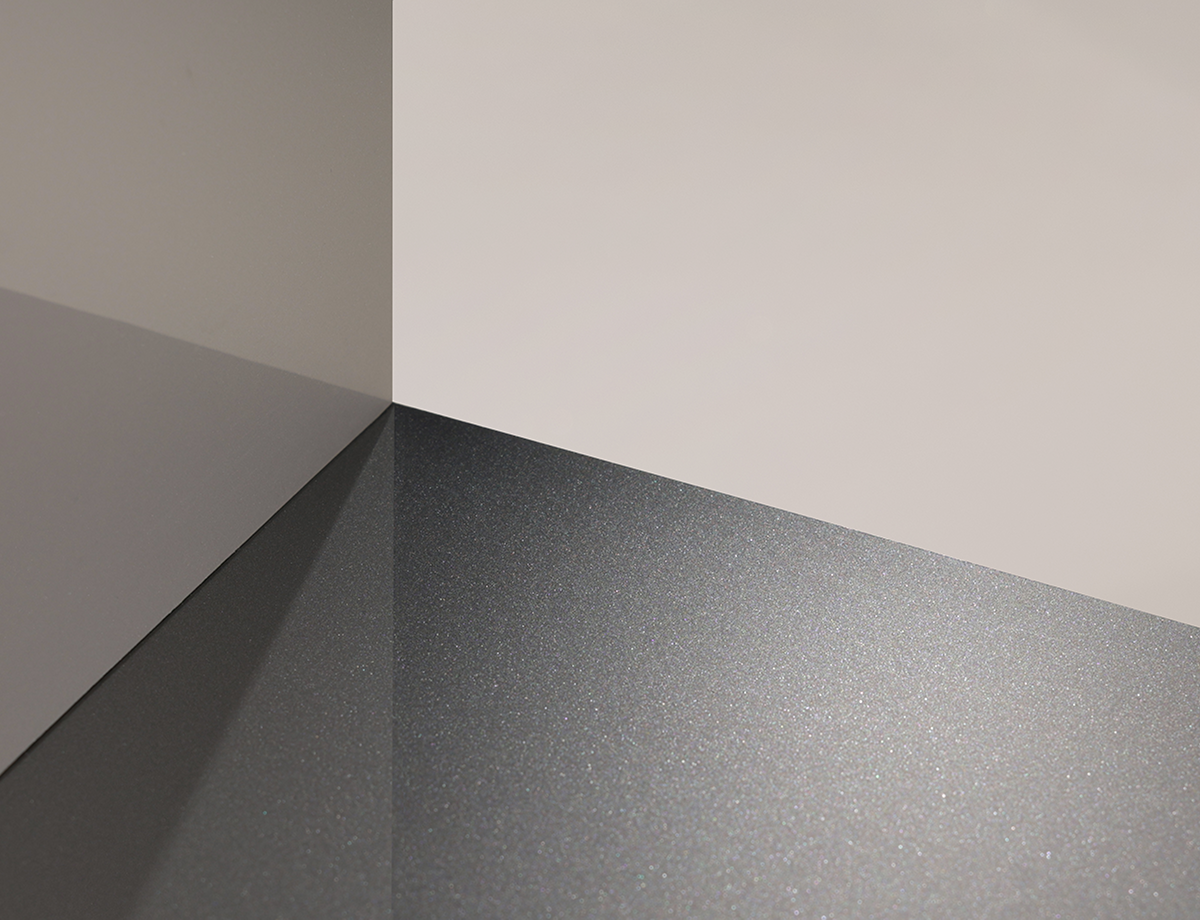
High gloss changes more than the colour of a cabinet. It reflects light, nearby finishes and the space around it, creating a different visual rhythm from a low-reflection matt face. NanoGloss is the high-gloss direction within the Verdécor collections.
A glossy sample should therefore be considered in context. Look at the reflected highlights as well as the colour itself. Position it beside the worktop, floor and hardware, and view it from the angles people will experience in the finished room. The balance between reflective and quieter surfaces is a design choice worth making early.
Distinguish the panel from decorative film
A complete NanoGloss panel includes its supporting core. The workshop receives a finished board to cut, edge and machine for the selected component. The core, sheet dimensions, thickness and supplied faces are part of that particular product record.
NanoGloss decorative Film is a separate supply form: a PET/acrylic-based surface that needs a suitable substrate and bonding or wrapping process. It is the final decorative surface, rather than removable protective film. A loose Film item and a finished panel can share an appearance while requiring different fabrication.
NanoGloss Film is for specified decorative applications and wrapping. It is not a high-wear horizontal surface or a desktop recommendation.
Compare the face and its edges
Use a labelled physical sample to judge reflection, colour depth and the transition to its coordinating edge. View the face straight on, then at a shallow angle. The gloss at a corner can be as noticeable as the colour across the front.
Confirm the visible reverse where a door can be seen from both sides. Complete NanoGloss panels have single- and double-sided options, but their precise construction must come from the selected item. A glossy appearance alone does not establish a particular core or approval for a kitchen preparation worktop.
Connect appearance with fabrication
Give the fabricator the component, final dimensions and intended shape before deciding on the supplied form. For decorative wrapping, confirm the base preparation and process. For a flat panel, coordinate the core, faces, edging and hardware requirements.
Record the décor code and full product specification alongside the approved sample. Explore the NanoGloss collection and decorative Film, then use the current technical information to check the intended application.
Leave a comment
This site is protected by hCaptcha and the hCaptcha Privacy Policy and Terms of Service apply.